
4 Bookkeeping Tips For Business Owners To Stay Organized
Good bookkeeping tips for business owners aren’t complicated — but they do require consistency. If you’ve ever felt like your business finances are running you instead of the other way around, you’re not alone. Most small business owners start out doing everything manually — tracking expenses in their head, filing receipts in a shoebox, and reconciling accounts only when absolutely necessary. The result? Chaos at tax time, missed deductions, and a constant low-level anxiety about whether the numbers actually add up.
The good news: it doesn’t have to be that way. A few simple bookkeeping habits, consistently applied, can transform your financial picture from overwhelming to manageable. For context, the IRS recommends keeping thorough financial records year-round. Here are four bookkeeping tips for business owners to put into practice.
Four Bookkeeping Tips for Business Owners to Stay Organized
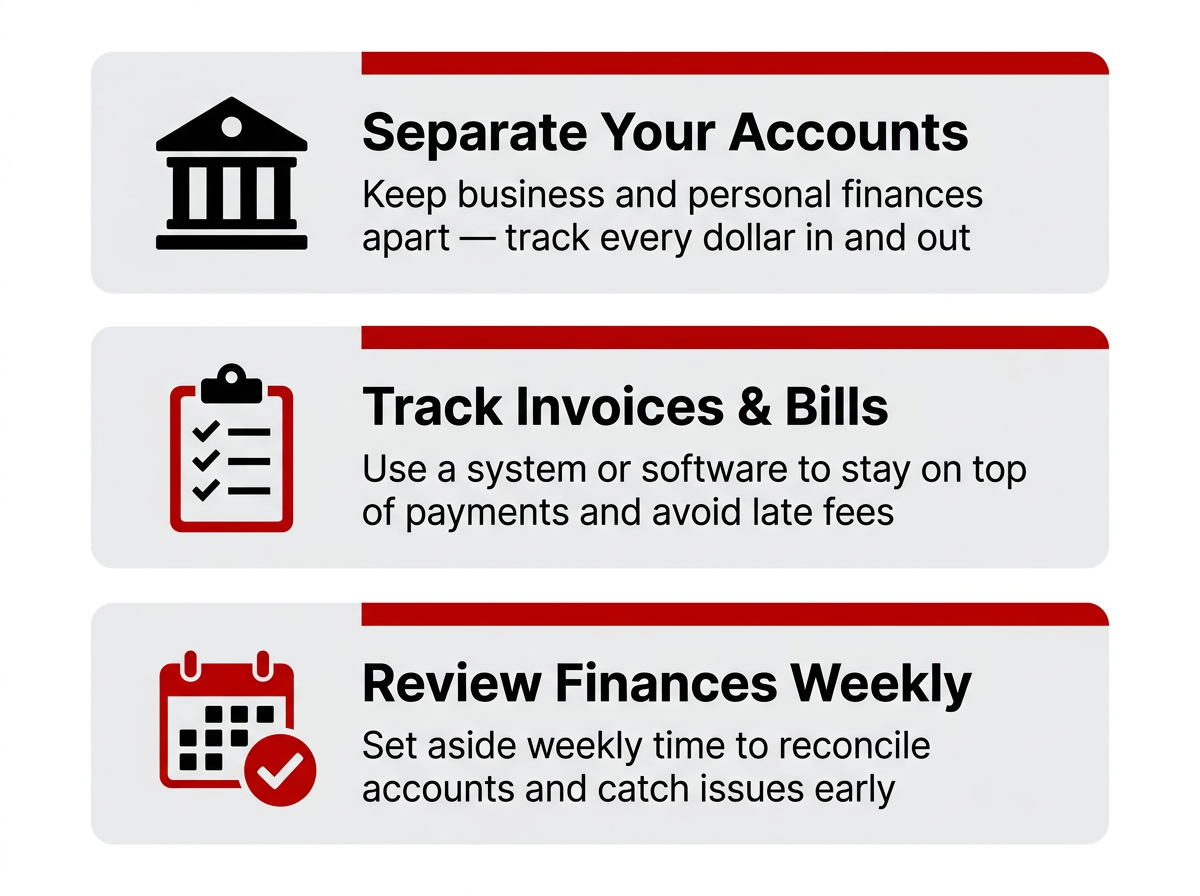
1. Keep a Dedicated Business Bank Account
This is the single most important step you can take, and it’s non-negotiable for any serious business. Using a separate bank account for all business income and expenses means you always have a clean, accurate record of your business cash flow — no sorting through personal charges to figure out what was business-related.
Track every dollar in and every dollar out. Whether you use accounting software like QuickBooks or a simple spreadsheet, the habit of recording transactions consistently is what gives you financial clarity. When every transaction is categorized and documented, you’ll know exactly where your money is going — and where you can tighten up.
2. Build a System for Invoices, Bills, and Payments
Disorganized invoicing is one of the most common ways small businesses leave money on the table. When you don’t have a consistent process for sending invoices and tracking payment status, things fall through the cracks — and you end up chasing clients for payments you’ve already earned.
Set up a simple system: send invoices on a consistent schedule, track their status (sent, viewed, paid, overdue), and follow up on anything past due within a set timeframe. On the expense side, make sure you’re reviewing and paying bills on schedule to avoid late fees. A reliable system here isn’t just about organization — it directly protects your cash flow.
3. Create a Document Storage System
Receipts, contracts, tax documents, bank statements, vendor invoices — the paper trail of running a business adds up fast. Without a clear system for storing and retrieving these documents, you’ll waste hours hunting for records every time you need them (and during tax season, you’ll really need them).
Whether you prefer a physical filing cabinet organized by category and year, or a digital system using cloud storage folders, the key is consistency. The goal: when you (or your bookkeeper or accountant) need a document, you know exactly where to find it within 60 seconds. Build the system once, maintain it consistently, and it pays dividends every single year.
4. Schedule a Weekly Financial Review
Most business owners review their finances only when something goes wrong — a cash flow crunch, a bounced payment, or a tax deadline looming. By then, you’re already in reactive mode.
A weekly financial review flips that script. Set aside 30–60 minutes each week to reconcile your accounts, review outstanding invoices, check on upcoming expenses, and make sure your records match your bank statements. This one habit catches errors early, keeps you current, and ensures you always have an accurate picture of your financial health — not just at year-end, but every single week.
Consistency in bookkeeping isn’t perfectionism — it’s protection.
The Bottom Line
None of these habits are complicated, but all of them require consistency to work. When you separate your accounts, track your invoices, maintain organized records, and review your finances weekly, you transform bookkeeping from a source of stress into a source of strength.
At Yield Bookkeeping, we help small business owners get their financial systems in order — and keep them that way. If you’re ready to stop guessing and start knowing exactly where your business stands, let’s talk.